
FAQs
Find Your Answer
Straight answers about ground-up multifamily construction in San Diego — what we build, what it costs, how financing and preconstruction work, and how to work with us. Pick a topic below to jump straight to it.
General Questions About Inabnet
Who we are, where we work, and what we are licensed to do.
Multifamily General Contracting
Scope, project size, cost, schedule, and how a multifamily GC differs from the alternatives.
Preconstruction, Entitlement & Permitting
What happens before ground breaks — and why it decides your budget.
Development Opportunities & Land
For brokers, wholesalers, and owners with a multifamily site to sell.
Private Equity — Debt & Equity Funding
Construction financing terms, the process, and how draws actually work.
Property Management
What happens after the certificate of occupancy.
Consulting
Advisory work when you need the expertise but not the full engagement.
Working With Inabnet — Process & Getting Started
Contracts, communication, vetting a GC, and the first step.
General Questions About Inabnet
Who we are, where we work, and what we are licensed to do.
What does Inabnet specialize in?
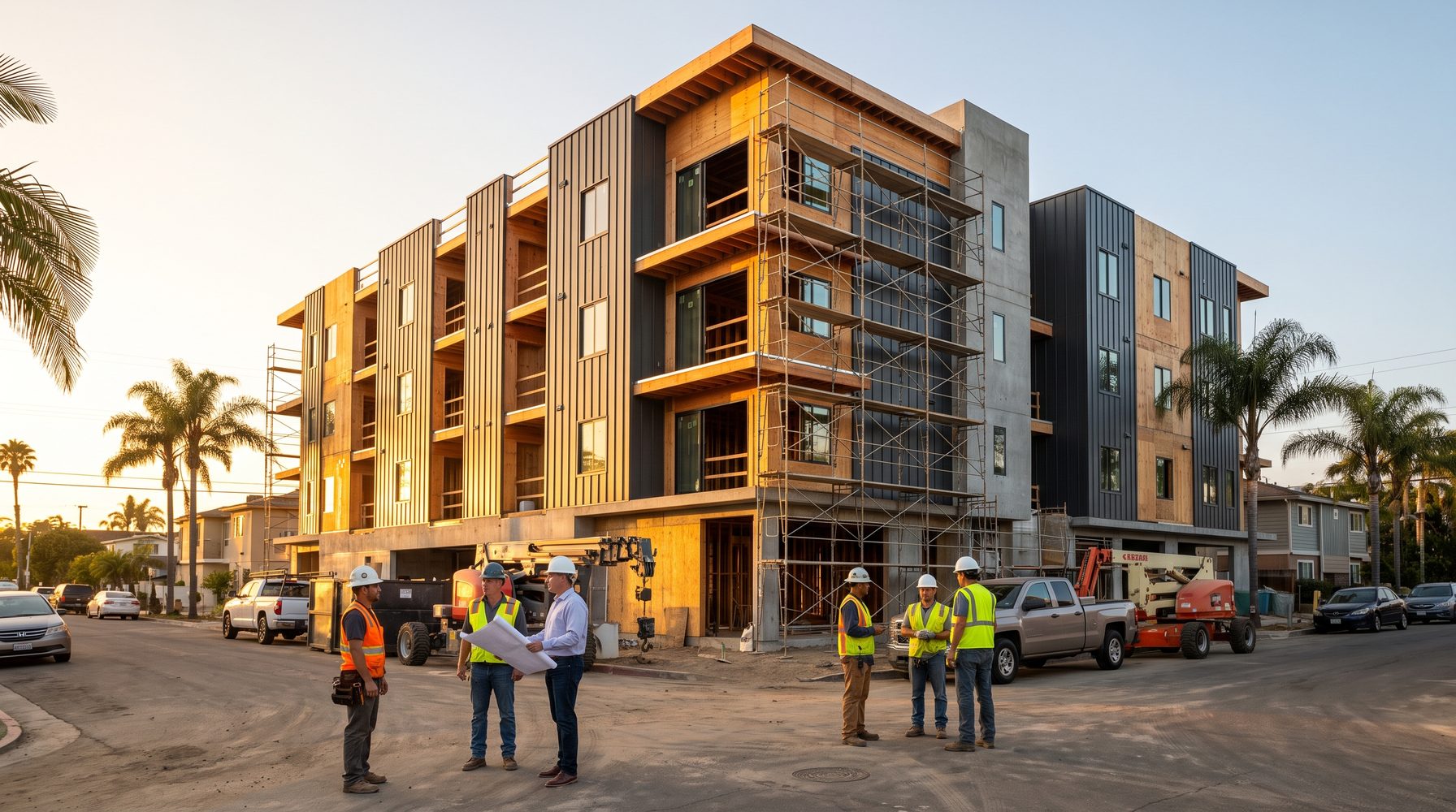
Inabnet is a general contractor focused on ground-up multifamily construction — apartments, townhomes, and mixed-use communities. That focus means our estimating, scheduling, procurement, and field supervision are all calibrated to the specific demands of apartment construction rather than spread across unrelated building types.
Alongside construction, we operate specialized divisions for development opportunities, debt and equity funding, property management, and consulting.
Where does Inabnet build?
Inabnet builds throughout San Diego County. You can see the communities and submarkets we cover on our service areas page, and our San Diego location page covers the market in more detail.
Is Inabnet a licensed general contractor?
Yes. Inabnet holds a California general contractor license (#1114346), a Florida general contractor license (#CGC1534866), and a California DRE license (#02087226).
What services does Inabnet offer besides general contracting?
Five divisions sit alongside construction, and they work independently or together depending on what a project needs:
- Development Opportunities — we buy multifamily land and properties directly.
- Private Equity — construction debt and equity funding.
- Entitlement & Construction — preconstruction and build.
- Property Management — operations and asset performance after delivery.
- Consulting — hourly or monthly advisory work.
A full overview lives on our services page.
Can I see examples of Inabnet's completed projects?
Yes. Our projects page and portfolio show completed and active work, and we publish detailed case studies on individual builds — for example 3901-3905 Haines St, 5173 Ewing Street, and 6209 Mesita.
Multifamily General Contracting
Scope, project size, cost, schedule, and how a multifamily GC differs from the alternatives.
What does Inabnet's general contracting scope cover?
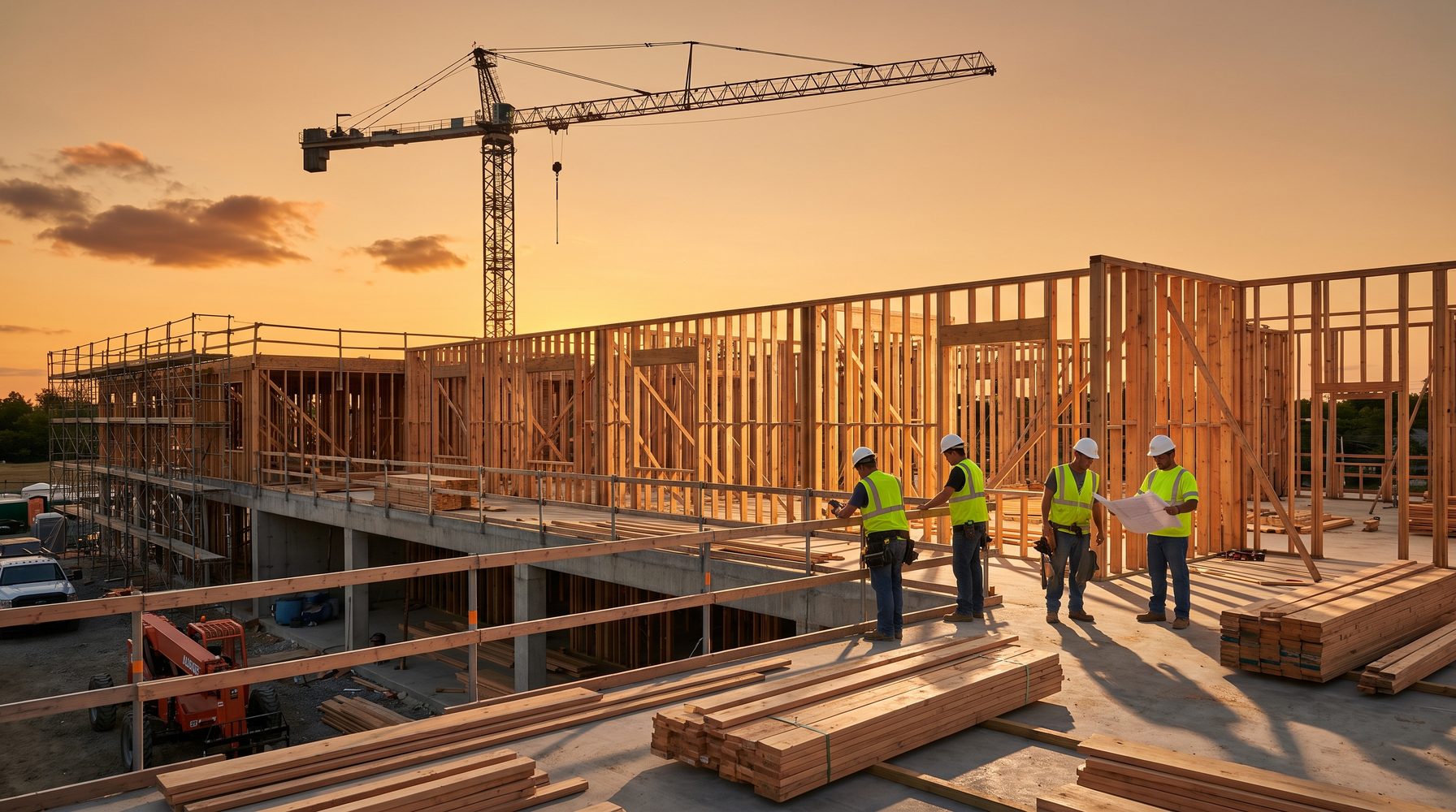
Full scope, ground-up. We manage every phase of the build — site preparation and foundation work through framing, mechanical systems, and final finishes — and we handle subcontractor coordination, material procurement, permitting, inspections, and schedule management.
Every project gets a dedicated team that stays accountable from groundbreaking through certificate of occupancy, so ownership groups can focus on the investment side while we deliver the physical asset. Details on our general contracting page.
What types and sizes of multifamily projects does Inabnet build?
Everything from small urban infill developments to large garden-style communities, including wood-frame podium builds and Class A apartments. Practically, that ranges from roughly 20-unit infill projects to 200-unit communities.
We tailor construction methods and material selections to each project's pro forma and target demographic. If you are weighing structure types, our article on wood-frame podium construction covers the trade-offs.
How large is Inabnet's subcontractor network?
More than 960 vetted trade partners across San Diego. Those established relationships give us priority scheduling, competitive pricing, and reliable crews across every trade a multifamily project needs — which matters most when the market is tight and availability, not price, is what moves your schedule.
When you are comparing GCs, ask each one for the actual bench by trade and how long those relationships have run. A borrowed subcontractor list is the most common thing developers fail to check. More on our general contracting page.
How much does multifamily construction cost per unit in San Diego?
Cost per unit moves with structure type, unit mix, parking strategy, finish level, and site conditions — a podium build over structured parking and a garden-style walk-up on a flat lot are not comparable numbers. Rather than quote a figure that will be wrong for your project, we publish a full breakdown of the current San Diego cost drivers in Multifamily Construction Cost Per Unit in San Diego: 2026 Breakdown.
For a real number on your specific site, our preconstruction team builds the budget from your drawings. Start there.
How long does it take to build an apartment complex?
The honest answer depends on unit count, structure type, and how long entitlement and permitting take in your jurisdiction — and the permitting half is often the larger variable. We break down realistic timelines phase by phase in How Long Does It Take to Build an Apartment Complex?
The other major schedule risk is change orders mid-build. Our article on preventing change orders covers how to design that risk out early.
How is a multifamily general contractor different from a commercial or single-family contractor?
Repetition and sequencing. Multifamily is the same unit built dozens or hundreds of times, so the value is in crew flow, procurement at volume, and inspection sequencing across identical stacks — skills a commercial GC building one-off tenant improvements or a residential builder framing custom homes does not develop.
We cover the practical differences in Multifamily vs. Commercial vs. Single-Family Contractors,.

Preconstruction, Entitlement & Permitting
What happens before ground breaks — and why it decides your budget.
Does Inabnet provide preconstruction services?
Yes, and we prefer to be heavily involved during the pre-con phase. Our in-house team gets in early to establish realistic budgets, run constructability reviews, value-engineer designs, and select subcontractors before ground is broken. Depending on where your drawings stand, we join design development meetings with the owner, architect, and engineers so construction insight lands well before anything is built.
What actually happens during preconstruction?
Budgeting from real subcontractor pricing rather than square-foot averages, constructability review of the drawings, value engineering where the design is spending money it does not need to, subcontractor selection, and schedule development. The output is a budget and a schedule you can underwrite against.
Our full explainer is What Is Preconstruction in Multifamily Development — And Why It Determines Your Budget.
When should a developer bring a general contractor into the project?
Earlier than most do. Bringing a GC in during design development — not after permit set — is what lets constructability problems get solved on paper, where they cost a redline, instead of in the field, where they cost a change order and three weeks. By the time drawings are complete and bid, most of the cost is already locked in.
How do you keep change orders from blowing up the budget?
Most change orders trace back to incomplete drawings, unverified existing conditions, or a scope gap between trades that nobody owned. We attack all three in preconstruction: constructability review to catch coordination conflicts, early subcontractor involvement so scope gaps surface during buyout, and a budget built from real pricing.
The mechanics are laid out in How to Prevent Change Orders in Multifamily Construction (Before They Happen).
What does Inabnet need before preconstruction starts?
A signed proposal agreement and an initial down payment. That keeps the front end of the engagement clean and lets us commit real estimating and coordination hours to your project rather than treating it as an open-ended bid. Details on our entitlement and construction page.
Development Opportunities & Land
For brokers, wholesalers, and owners with a multifamily site to sell.
Does Inabnet buy multifamily land or properties directly?
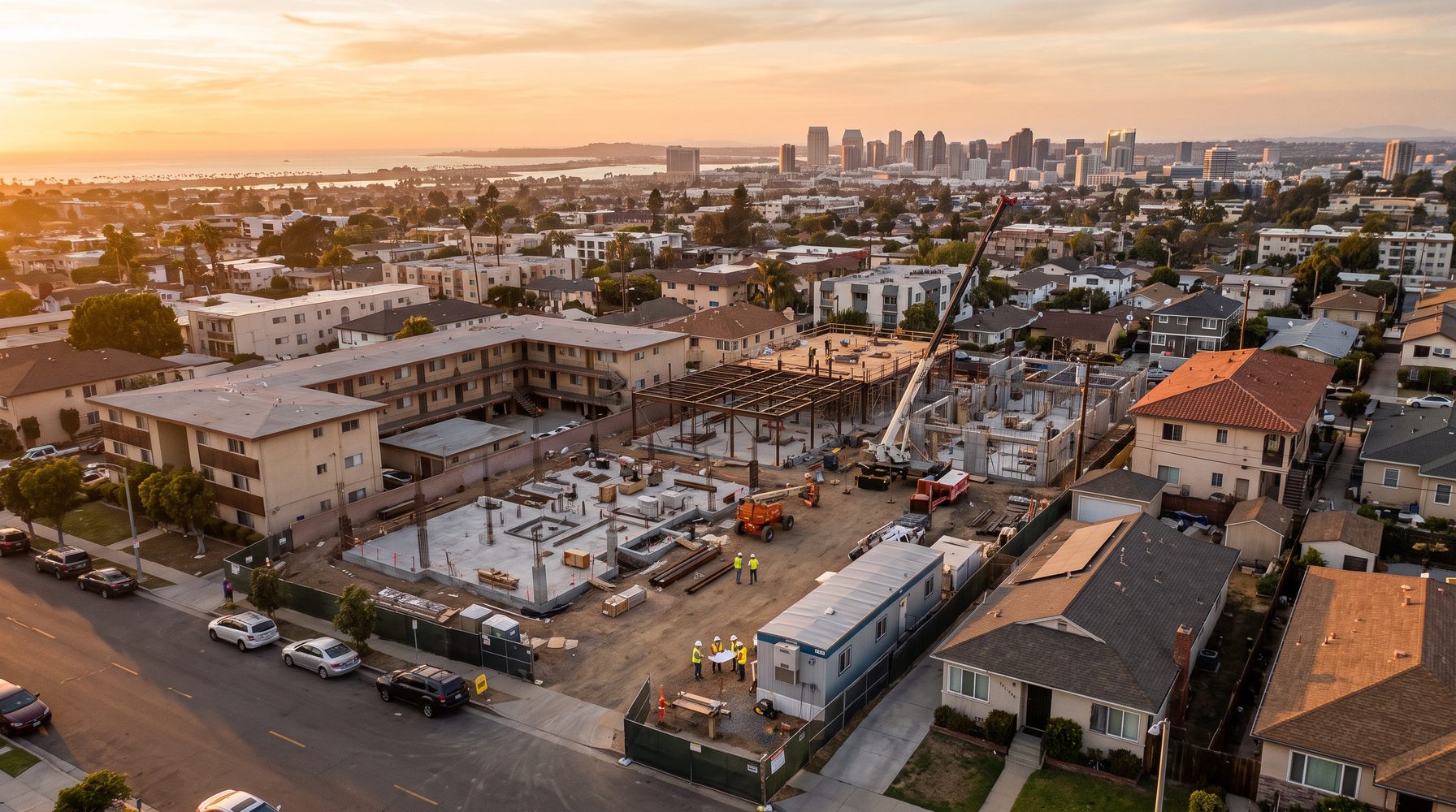
Yes. Inabnet is a direct buyer with established funding resources, so sellers get quick decision-making and reliable execution rather than a chain of contingencies. We evaluate all property types — development sites, value-add opportunities, and stabilized assets.
What kinds of properties is Inabnet looking for?
Multifamily lots with development capability. We specifically prefer sites that already have existing, non-renovated structures on them, because that lets us add value to the existing units and lease them up while the entitlement process runs — which is a materially better carry position than holding raw dirt.
I'm a broker or wholesaler with a multifamily lot — how do I bring it to Inabnet?
This service exists specifically for realtors, brokers, lenders, wholesalers, and anyone else who knows of or is selling a multifamily lot with development capability. Send the site through the form on our development opportunities page or contact us directly, and we will give you a straight answer on fit quickly rather than sitting on it.
Where is Inabnet actively acquiring?
We actively acquire multifamily properties in Pacific Beach, San Diego, and evaluate opportunities across San Diego County — see our service areas. On why that submarket specifically, read What You Need to Know About Pacific Beach Investment Properties and Why Pacific Beach Real Estate Investment Represents Your Best Opportunity.
For the wider market picture, see San Diego Multifamily Condo Development: Why the Market Works in 2026.
What returns does Inabnet target on its development deals?
We target a minimum 15% IRR depending on hold timeline, which can rise to 30%+ in some cases, and our minimum target ROI is 30% with certain deals reaching 50%+. Back-end profits are typically split in favor of the investor. We focus on new construction, which puts hold timelines at a minimum of 18 months and up to 48 months, and we provide an annualized preferred return on invested capital while we hold the funds through the development life cycle.
These are targets, not guarantees — every deal gets underwritten on its own numbers. Background reading: Is Investing in Multi-Family Properties a Good Investment?

Private Equity — Debt & Equity Funding
Construction financing terms, the process, and how draws actually work.
Does Inabnet provide construction financing?
Yes. Our private equity division offers both debt funding and equity funding for multifamily new construction. We run through the deal with you to determine whether we have a loan product that fits, then provide a quote showing the new construction financing breakout for your project. Full detail on the private equity page.
What are Inabnet's debt loan terms?
Our published debt offerings are:
- 70% LTV
- 80% LTC
- 9–12% interest rate
- $25,000,000 maximum loan
- 12–36 month term
- Multifamily, 5+ units
Rates and leverage move with the real estate market, so treat these as the current shape of the product rather than a locked quote — the number you get comes out of underwriting on your deal.
What is the difference between the debt funding and equity funding options?
Debt funding is a loan against the project — you keep ownership and repay principal and interest on the terms above. Equity funding means capital comes in alongside you as an ownership position, with returns driven by the deal's performance and a back-end split rather than a fixed rate. Which one fits depends on how much of the capital stack you need filled and how much of the upside you want to keep.
Our consulting division also builds financial models and debt financing strategy if you want the analysis before committing to a structure.
What does the funding process look like start to finish?
Four steps. We run through the deal with you to determine fit. We provide a quote showing the financing breakout for your project. We work through underwriting and the term sheet. Then we gather all deal documents from you and prepare for closing.
Rates and leverage change with the market, so the earlier in your timeline we see the deal, the more useful the quote is.
How does a construction draw schedule work?
Construction debt does not fund in a lump sum — it releases in draws tied to verified completed work, with inspections and lien releases gating each release. Each draw request is submitted against a schedule of values, inspected, and released net of retainage, which means your equity carries the project between draws. Understanding that timing is what keeps you from carrying float you did not budget for.
Our full guide to how to read a construction draw schedule walks through a complete draw cycle, from schedule of values through inspection to lien release. Our consulting division models draw timing as part of the financial structuring package.
Property Management
What happens after the certificate of occupancy.

What does Inabnet's property management division do?
We run a dual focus: daily operational efficiency and long-term asset value enhancement. In practice that means proven systems for maintenance, leasing, and resident satisfaction, combined with sophisticated financial oversight — which is how we consistently achieve strong occupancy rates and operational performance across our San Diego properties. See the property management page.
What kinds of properties does Inabnet manage?
Multifamily communities in San Diego. Because the same company built many of the assets we manage, we know the building systems, the warranty position, and the trades behind every component — which shortens the distance between a resident issue and a resolved one.
How does Inabnet approach occupancy and resident retention?
Through operations rather than concessions. Consistent maintenance response, disciplined leasing systems, and attentive service delivery are what keep renewal rates up; discounting rent to fill units is what happens when those systems are not in place. Our published position is that combining financial oversight with service delivery is what produces superior occupancy and operational performance.
What should I ask before hiring a property management company?
Fee structure and what it actually includes, maintenance response process and after-hours coverage, reporting cadence and format, leasing and renewal performance on comparable assets, and who specifically will be on your account. We wrote the full list in What Questions Should You Ask Before Hiring a Property Management Company? and covered the San Diego market specifically in Finding the Right Multi-Family Property Management in San Diego.
Can property management be combined with construction?
Yes. Our divisions work independently or together depending on what you need. Handing the completed asset from the build team to the management team inside one company removes the usual gap where warranty items, as-builts, and system knowledge get lost in a handoff to a third-party manager.
If you want the operations reviewed without changing managers, our consulting division offers a property management optimization package.

Consulting
Advisory work when you need the expertise but not the full engagement.
What does Inabnet's consulting division do?
It combines multifamily expertise with active market experience — meaning the advice comes from a firm currently building, funding, and managing in San Diego, not from a slide deck. We deliver strategic guidance on market analysis, project feasibility, and operational efficiency, drawing on our hands-on knowledge in construction, funding, and property management.
How is consulting priced?
Hourly or monthly, for multifamily real estate development, debt lending, construction, and property management deals. Which one fits depends on whether you need a defined piece of analysis or ongoing advisory through a project. Tell us the scope and we will tell you which makes sense.
What consulting packages are available?
Four, all covering San Diego:
- Comprehensive Development Package — opportunity analysis, market research and feasibility studies, regulatory compliance guidance, timeline and budget planning. Deliverables include a development report, site suitability analysis, and risk assessment.
- Financial Structuring and Debt Lending Package — financial modeling, debt financing strategy, assistance securing financing, lender negotiation support. Deliverables include custom financial models and a debt financing options report.
- Construction Management Advisory Package — project oversight, contractor selection, budget management and cost control, quality assurance and timeline monitoring. Deliverables include a construction management plan and progress reports.
- Property Management Optimization Package — process assessment, efficiency and cost-saving strategies, technology integration, staff training. Deliverables include an optimization plan, implementation roadmap, and training materials.
Who is consulting for?
Owners, investors, and developers who need experienced judgment on a specific decision — whether a site pencils, whether a financing structure is right, whether a contractor selection holds up, whether an operation is leaving money on the table. Our articles Why Every Multi-Family Development Needs a Professional Construction Consultant and San Diego Multi-Family Consulting cover where outside expertise pays for itself.
Working With Inabnet — Process & Getting Started
Contracts, communication, vetting a GC, and the first step.

How do I start a project with Inabnet?
Reach out at sales@inabnet.com or use our contact form. We will schedule an initial conversation to learn about your project, discuss your goals, and determine how Inabnet can support your build from preconstruction through closeout.
What contract structures are used on multifamily projects?
Three structures cover most multifamily work: guaranteed maximum price (GMP), lump sum, and cost-plus. Each moves risk between owner and contractor differently, and the right one depends on how complete your drawings are and how much cost certainty you need before you close financing.
We break down the trade-offs in GMP vs. Lump Sum vs. Cost-Plus: Which Multifamily Contract Is Right for You? — and we will walk through which structure fits your project during preconstruction.
How does Inabnet keep owners and investors informed during construction?
Over-the-top communication is the standing rule. We use project management software that integrates every contact on the project, so owners, architects, and engineers get real-time access to schedules, budgets, change orders, submittals, RFIs, and estimates from a phone or desktop at any time — backed by weekly progress reports and regular on-site meetings.
What that looks like week to week is covered in What to Expect When Working With a Multifamily Contractor.
How should I vet a general contractor before hiring one?
Verify the license, confirm the subcontractor bench is real and not borrowed, look at completed multifamily projects of comparable size, check how they handled the projects that went wrong rather than the ones that went right, and read the contract's change-order and schedule language before you sign it.
We published three pieces on exactly this: 5 Things Developers Get Wrong When Hiring a GC, How to Find the Right Multifamily Contractor in San Diego, and 8 Essential Factors for Selecting a Multifamily Construction Company.
Is Inabnet hiring, and how do subcontractors get on the bid list?
Open roles are posted on our careers page. Trade partners who want to be considered for our San Diego bid list should reach out through the contact form with your trade, license, bonding capacity, and recent multifamily references.
Still Have a Question About Your Project?
Tell us about the site, the unit count, and where you are in the process. We will tell you straight whether we are the right general contractor for it — and what it will realistically take to build.