
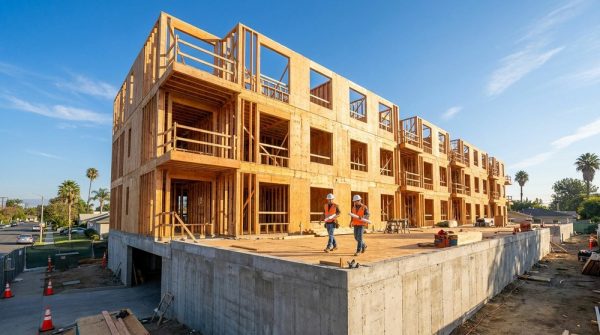
Getting a reliable number for multifamily construction cost per unit San Diego developers can actually build a pro forma from is harder than it should be. Most benchmarks circulating in developer conversations are stripped of soft costs, built on outdated labor pricing, or based on product types that do not match your project. Inabnet is a multifamily general contractor building in San Diego — and this breakdown reflects current market conditions for the second half of 2026.
What “Cost Per Unit” Means — and Why the Range Varies
Cost per unit is total construction cost divided by number of units. A 60-unit building that costs $15 million to build has a per-unit hard cost of $250,000. That benchmark is one of the most useful numbers in San Diego multifamily development — but it only means something if you know what product type and unit mix the number assumes.
A 250-square-foot studio counts as one unit. So does a 1,200-square-foot three-bedroom. Before you use any benchmark in your pro forma, confirm what structural system, unit count, and finish standard the figure was built on. A number without that context is not a cost estimate — it is a guess.
2026 Per-Unit Cost Ranges for San Diego Multifamily
San Diego is one of the most expensive construction markets in the country. High labor costs, California building codes, and limited subcontractor capacity all push costs above national averages. The following ranges reflect what Inabnet works from for ground-up multifamily construction in San Diego in 2026:
- Garden-style wood-frame (3–4 stories, no podium): $175,000–$265,000 per unit in hard costs
- Wood-frame podium (4–6 stories, Type IIIA over IA): $230,000–$370,000 per unit in hard costs
- Concrete or steel mid-rise (6–12 stories): $375,000–$525,000+ per unit in hard costs
These are hard cost figures only. Soft costs — design fees, entitlements, impact fees, and financing — add 20%–30% on top depending on project scope. The ground-up multifamily cost picture does not close until you account for both sides of that equation.
Hard Costs: Where Most of Your Budget Goes
Hard costs cover the physical construction: site work, foundation, framing, mechanical and electrical systems, plumbing, finishes, and general conditions. In San Diego, framing labor and structural concrete are consistently the two largest hard cost line items on any multifamily project.
Structural concrete runs roughly $900–$1,200 per cubic yard installed in this market. Mechanical, electrical, and plumbing typically represent 18%–22% of total hard costs on a mid-density project. According to the Turner Construction Cost Index, construction costs in the Western United States rose 4.2% year-over-year through Q3 2025 — San Diego tracks at the higher end of that range due to constrained labor supply and persistent multifamily demand. Any construction cost breakdown you receive should include general conditions (8%–12% of direct costs), overhead, and profit. If those line items are absent, the number is not a real bid.
Soft Costs: What Developers Regularly Underestimate
Soft costs include architecture and engineering fees, permit fees, development impact fees, entitlement costs, construction loan interest, and owner’s representative fees. In San Diego, these costs are higher than in most other U.S. markets and require project-specific due diligence.
Permit and development impact fees in the City of San Diego can add $15,000–$30,000 per unit, varying by project location, size, and affordability tier compliance. Architecture and engineering fees for a 40–80 unit project typically run 6%–9% of hard costs. A flat 15%–20% soft cost assumption on a San Diego pro forma is not sufficient. You need the actual fee schedule pulled for your specific APN before you close on land — not after.
San Diego-Specific Cost Factors You Cannot Ignore
San Diego’s cost environment is shaped by forces that do not apply in other markets. Subcontractor capacity for specialty trades — plumbing, mechanical, electrical — is tight, particularly in the 20–100 unit range. GCs without established trade partner relationships will see premium pricing on every scope. That sub-network depth is a budget variable, not a talking point.
California’s seismic detailing requirements add structural cost that does not exist in Florida or Texas. Wood-frame podium projects require engineered shear walls, special inspections, and moisture protection details that are not standard in non-seismic markets. Title 24 energy code and California reach code requirements for EV charging and battery storage add $1,500–$4,000 per unit on top of base MEP costs. These line items are code requirements — they belong in your budget from day one, not as contingencies.
Start your preconstruction with Inabnet — we model apartment construction cost per unit against your specific site, product type, and program before you commit to a structural system or submit for permit.
How Product Type Selection Drives the Per-Unit Number
The single largest cost driver in any ground-up multifamily project is your structural system. The wood-frame podium dominates San Diego multifamily development at mid-density scales because it delivers more units per acre than garden-style construction at a fraction of the per-unit cost of a fully concrete building.
The concrete podium level adds cost relative to an all-wood building but unlocks 4–6 stories of residential at wood-frame pricing above. Moving from garden-style to podium typically adds $55,000–$90,000 per unit in hard costs. That step up only makes sense if your land basis, entitlement yield, and achievable rents support it. This is a math exercise that belongs in preconstruction — not on a napkin at a land closing.
How Preconstruction Holds Your Budget Together
Most cost overruns on multifamily projects do not start in the field — they start at the drawing board. Structural system decisions, MEP design choices, and finish specifications get made during design and become change orders once construction is underway. The only reliable mechanism for controlling ground-up multifamily cost in San Diego is to front-load cost modeling during preconstruction, before those decisions are locked.
At Inabnet, preconstruction includes real-time cost modeling as design evolves, trade partner buyout strategy, and a value-engineering pass before permit submission. Developers who skip preconstruction typically absorb 8%–15% in avoidable change orders. On a $15 million project, that is $1.2M–$2.25M in cost that did not have to happen.
Frequently Asked Questions About San Diego Multifamily Construction Costs
What is the average cost per unit to build multifamily in San Diego in 2026?
Hard costs for ground-up multifamily in San Diego range from $175,000–$265,000 per unit for garden-style wood-frame, $230,000–$370,000 per unit for wood-frame podium, and $375,000 and above for concrete or steel mid-rise. These figures exclude land, entitlements, design fees, impact fees, and construction financing — which typically add 20%–30% of hard costs in San Diego.
What drives San Diego’s higher multifamily construction costs?
California’s seismic and energy code requirements, higher local labor rates, and tighter subcontractor capacity all push San Diego construction costs up relative to national benchmarks. Inabnet can provide current comparative cost data for developers evaluating their San Diego project.
What is not included in a cost per unit construction estimate?
Standard hard cost estimates exclude land, entitlement and permit fees, development impact fees, architecture and engineering fees, construction loan costs, and owner’s representative fees. Budget an additional 20%–30% of hard costs for soft costs on a San Diego multifamily project. The precise number requires a site-specific fee analysis for your APN and jurisdiction.
When should I bring a general contractor into the process?
The earlier the better — ideally at schematic design, before structural systems or MEP scope are finalized. Early GC involvement through preconstruction allows cost modeling to shape design decisions before they are locked into drawings and become expensive to revise. Waiting until you have a full construction document set to solicit bids is how avoidable cost gets built into a project.
Ready to Get Started?
If you are evaluating a San Diego multifamily project and need a real cost number tied to your site, program, and product type, Inabnet can provide that through preconstruction — before you go to permit.